
Pandemic Book Recommendation #16: Strong and Weak by Andy Crouch
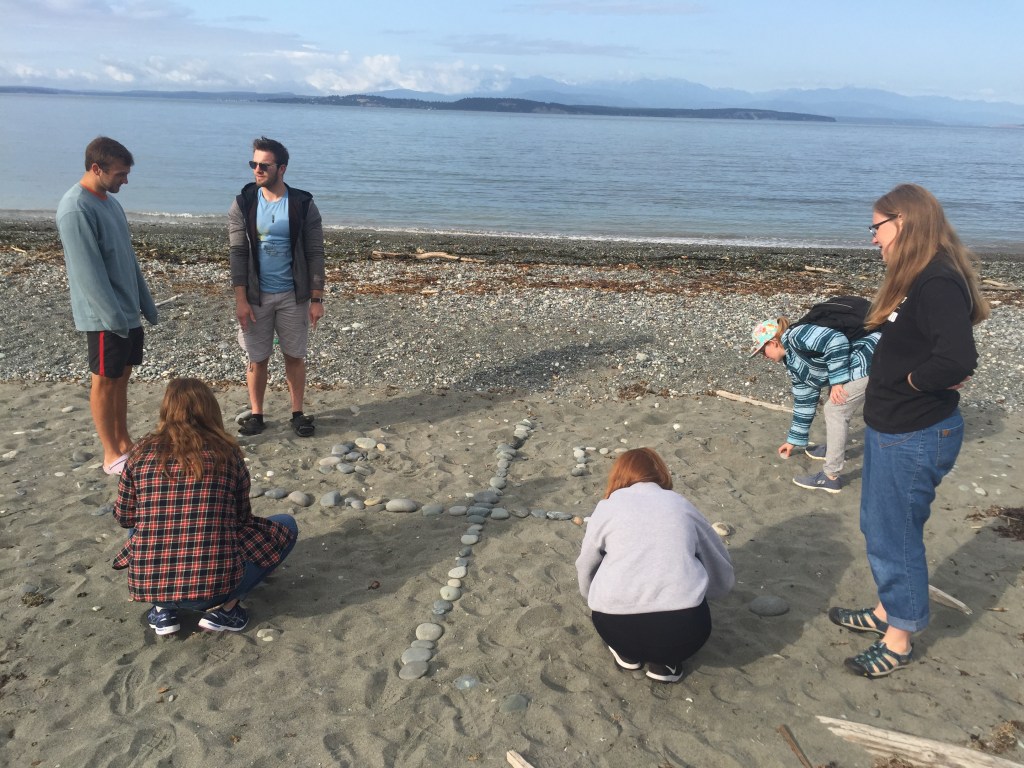
Strong and Weak is another book I use with my Au Sable International Development class each summer. Instead of assigning it as required reading, we dissect it during one of our beach discussions. In the book, Andy Crouch provides a fantastically profound yet straightforward 2X2 paradoxical grid juxtaposing authority with vulnerability. The paradox is that authority and vulnerability are not opposites but exist best together. In the class, we recreate the grid using rocks on the beach, then leave it for others to wonder about what kind of pagan ceremony occurred there.
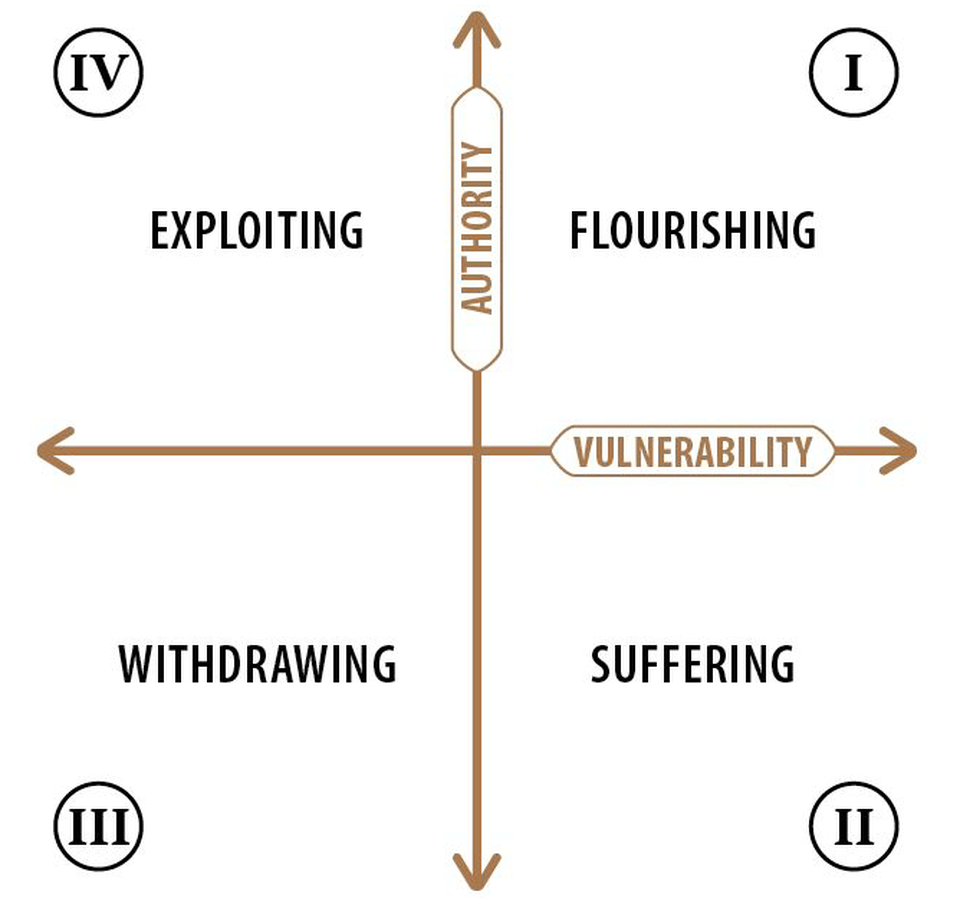
In the grid, authority can be interpreted as power – similar to the kind of power discussed in my last review of Playing God. Strong and Weak is the sequel, and Jayakumar Christian continues to play an inspiring role. In Crouch’s model, the higher on the grid you are, the more self-efficacy you possess and the more capacity you have to exert authority over others. The further on the right you exist on the grid, the more vulnerable you are. So if you are in the lower left quadrant of “withdrawing,” then you may live like a character in the Wall-E movie, on an eternal cruise in which you are completely safe but also not using your God-gifted authority to make the world a better place. In the bottom right, you would have no power and be highly vulnerable; thus, you would be “suffering.” In the upper left, you might have extraordinary authority, but if you are not also vulnerable, then you become “exploiting.” Finally, Crouch describes the upper right quadrant as “flourishing” – being in a place of BOTH authority and vulnerability.
You need to read his short book to get the whole picture. In summary, Crouch uses Jesus Christ as a model to demonstrate the flourishing life as one of both authority and vulnerability, and he does this again through the lens of Philippians 2. When either authority or vulnerability is absent — or when both are missing — we find distortions in humans, organizations and institutions. Instead of flourishing, we create cultures immersed in suffering, withdrawing and exploiting. Leaders today need to be both strong and week – wielding authority with vulnerability.
The pandemic has created a situation in which nearly all of us find ourselves suddenly moving around on this grid. We may be unemployed, laid off, and financially vulnerable. Some of us are also vulnerable to the virus itself – our lives are literally in danger. We are collectively moving toward the bottom of the quadrant as the efficacy we had to determine our future erodes. A few of us may be fortunate enough to settle into the bottom left – to have the means to withdraw into video games or Netflix. Many of us, though, are suffering in the lower right quadrant – powerless to the changing world.
In this context, we are faced with a unique opportunity to follow in the footsteps of Jesus. We can do this in two ways.
First, we can ask ourselves whether our loss of power/authority is ultimately the loss of an idol and not a loss of efficacy in its own right. Have we been putting our hope and trust in our wealth? If so, the threat of losing it is tantamount to losing confidence in having a good future. The danger here is that we might spring into action to do whatever is necessary to protect that in which we trust. Crouch writes, “In the grip of idols, we believe that our problem is not enough authority. Life becomes a quest to acquire enough authority to manage and minimize our vulnerability… To people who see the world this way, gaining authority without vulnerability is the pearl of great price, something you would sell everything to obtain.” Crouch’s advice for us – if we find ourselves here – is as simple yet profound as his grid: relinquish power and confess sin.
“Therefore I tell you, do not worry about your life, what you will eat or drink; or about your body, what you will wear. Is not life more than food, and the body more than clothes? Look at the birds of the air; they do not sow or reap or store away in barns, and yet your heavenly Father feeds them. Are you not much more valuable than they? Can any one of you by worrying add a single hour to your life? Matthew 6:25-27
Second, we can embrace our vulnerability as Christ embraced his. Crouch reminds us that the story which turned the world upside down is not a story of ultimate power made manifest, but of ultimate vulnerability to the point of dying on a cross. To become like Christ, what we are missing is not more authority, but more vulnerability. This is not trite, as many are experiencing the agony of the Garden of Gethsemane amid tragic loss. But we do not suffer alone. Christ has gone before us. He can be our model and even our companion on the journey.
The pandemic is likely not going to be a short trial. On a podcast last week, Andy described how many Christian leaders seem to be looking at this pandemic as though it is a blizzard, suggesting we need to hunker down for a few days, then it will be over. He argues, based upon well-informed sources, that this will more likely be a full winter, if not even a mini ice age. Some, wishing this to be a blizzard and bent on the need for invulnerable authority, are already up in arms. Many of these individuals are Christians, and many pastors are encouraging their flocks to disregard the government and stand up for their God-given rights of freedom. The motto of West Virginia, my home state, is montani semper liberi – mountaineers are always free. The lockdown appears to many friends on my social media feed as an attack on liberty. But in the spirit of Strong and Weak, forcing our will while putting others at risk is not a Christian response. It is rooted in fear. If we want to be agents of transformation in the world today, perhaps we should take a lap through Strong and Weak before grabbing an assault rifle and heading to the capitol. There is a way to bear the burden of authority with vulnerability, and this book can help us find it.



 Michael Ferber