The bright morning star and the fruit tree: metaphors for hope in these troubled times

Pandemic Book Recommendation #9, Part 3: Hope

Part 2: Ideology

Part 1 Idolatry

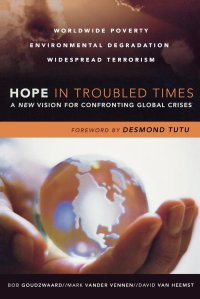
Every day during this pandemic, I find it more difficult to see hope, especially when it comes to COVID-19’s spread across America. My oldest daughter is in Phoenix, and my family, including my parents, are spread across West Virginia and Kentucky. The slow daily crawl watching the case numbers climb is like a dawdling spiritual poison from a drug that takes weeks to finish its work.  Nonetheless, hope is always available if we are willing to seek it out. I’m trying. Bob Gouzwaard, Mark Vander Vennen and David Van Heemst remind us that hope is real because, “at its core, it is not a human creation. It attaches itself directly to the faith that God is deeply engaged in all of human history.” (172)

The conclusion of their book contains themes and metaphors of hope that apply to the tragic realities of pandemic. Some of their tropes are extraordinary and have consumed a few classes worth of past discussions in my courses. There is no space here for unpacking the circle and the cross (175), the periscope (181), the minesweeper (184), or the rope-ladder (187). Here I will only stick to two that seem most pertinent.

The Morning Star

There are beautiful signs of hope in the form of front-line health care workers sacrificing their own lives and safety to serve others – but even these stories exist in the context of tragedy. My Facebook feed is awash in the language of fear, blame and shock. When will this end? Where is God?

The authors of Hope in Troubled Times remind us that “Christian hope is a hope of contrast: it revives in the middle of the night, just when darkness seems to overpower us.” (176) They use the Biblical image of the morning star, which appears at the bleakest hours of the night, as a demonstration of the defeat of darkness. When the star appears, the morning is behind it. In the last words Jesus spoke to his disciples, he proclaimed, “I am… the bright morning star.” (Rev. 22:16)

The book of Esther in the Bible does not contain a mention of God. Yet, Esther’s name means “morning star.” She lived when the elimination of Israel appeared as fate. God seemed absent – but was there all along. “Miracles did not save Israel, at least not miracles as we understand them. But as a God who works hiddenly, God linked his saving acts to the act of Esther, who in obedience put her own life in jeopardy… When Esther is seen in the darkness of exile, that is the sign of daybreak. Where God in his hiddenness can be delineated, there is sign that the defeat of the night has come.” (177) Our front line health care workers are the Esthers of our day – the bright morning stars revealing the light that, though dim now, is soon to awaken the morning.

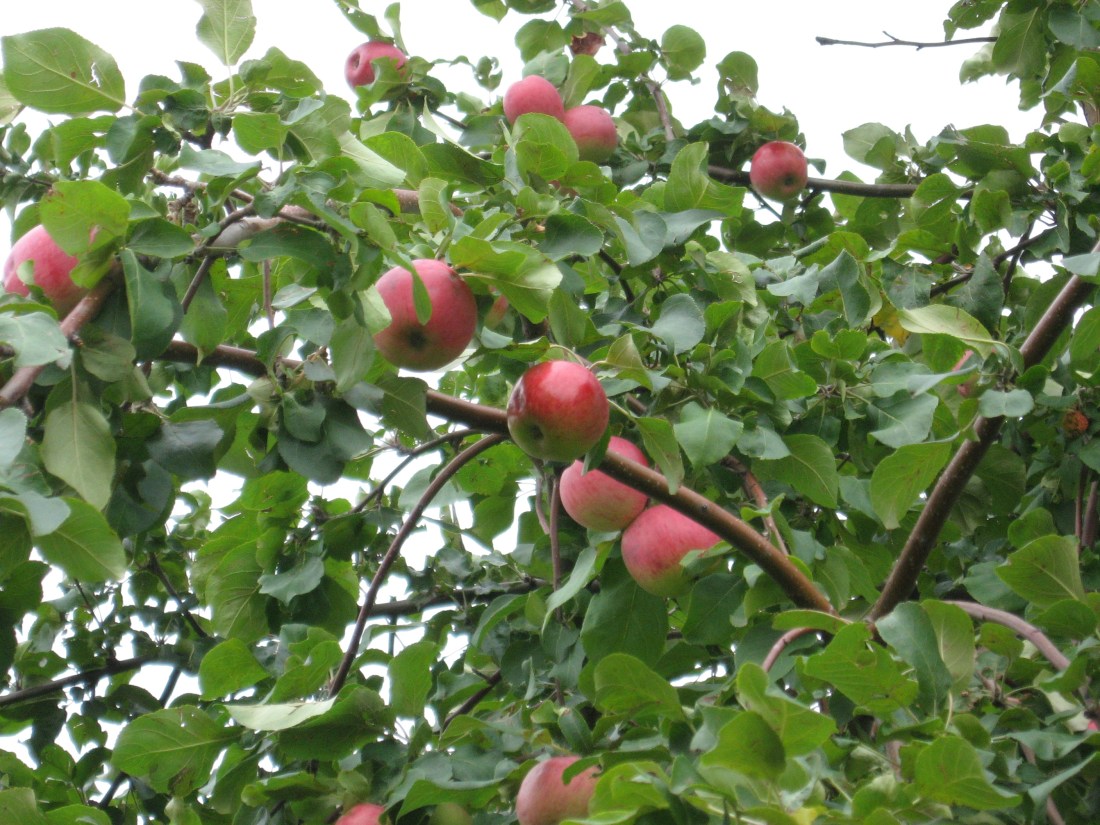
The Fruit Tree

I have suggested through the lens of this book that we are living in an age in which progress and material prosperity is the reigning ideology, perhaps to the point where economic growth has become an idol. This tragic pandemic can act as a catalyst for us to search our hearts about how we want to live in the coming post-COVID-19 world. The authors provide the fruit tree as a helpful metaphor in this regard.

“No fruit tree is inclined to grow infinitely in height. If it did so, it would have to jettison all of its inefficient cells. It would have to put greater pressure on the soil and forgo the production of fruit entirely. Instead, at a certain point a fruit tree exercises built-in wisdom to redirect its growth energies away from expansion in height and toward the production of fruit. It reaches a saturation point and recognizes it as such. This allows the tree to create room to build up reserves and then to redirect its growth energies toward the production of fruit.” (191)

Like fruit trees, our economies – at the scales of the household and the nation – were not intended to grow infinitely forever. Like trees, we arrive at saturation points in which we have a choice to re-orient our energies toward the production of fruit rather than infinite growth. The authors suggest we “take one decisive, perhaps painful, but also realistic step back from the economic goal that hypnotizes us.” On the other side of this pandemic, we can choose to develop a pre-care economy as opposed to a post-care economy. This would place care needs first rather than last on a list of priorities. We could turn away from simplistic material expansion and toward sustainable economies that build community, meet the needs of the poor, and invest in the preservation of culture and the environment. Perhaps one of our problems is that “we have failed to imagine that the world can operate in any other way.” (192)
Pandemic Book Recommendation #6: The Sacred Year

On Saturday I posted my first pandemic book recommendation on James K.A. Smith’s “You Are What You Love.” Today’s suggestion follows along in that same vein – ideas for developing healthy spiritual disciplines while we are already social distancing. By the way – Rev. Jonathan Crane (Rector of St. Augustine of Canterbury Anglican Church in Edmonton) saw my post and invited me to chat about it with him on his church’s podcast. Check it out!

In today’s recommendation, Mike Yankoski has provided a helpful guide for exploring traditional and modern spiritual disciplines. As an evangelical motivational speaker, the author became frustrated by the lack of depth in his own spiritual life and in his tradition. He opens with a painful example while on the road with other Christian motivational speakers. To remedy the shallowness he decided to spend an entire year researching and practicing a variety of disciplines, and so “The Sacred Year” recounts this adventure exploring depth in himself, God and others.

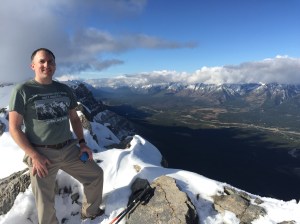
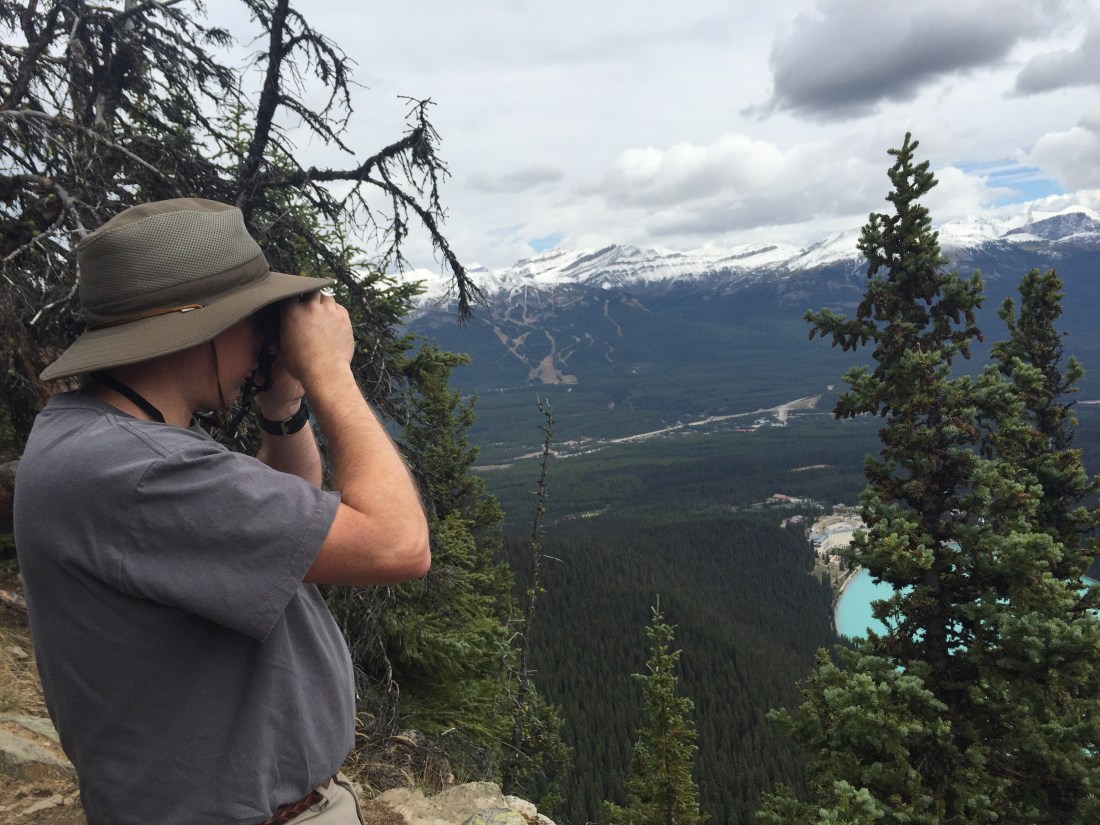
I “read” the book while hiking in the Canadian Rockies with my brother Andy in the Fall of 2017. As we summited Ha Ling over Canmore, reached Sentinel Pass above Larch Valley, and managed to top both of the Beehives then traverse the Valley of the Ten Glaciers above Lake Louise (all in three days) I listened to the entire book – twice! I’m an extrovert, so on these adventures I’m as social as can be in the mornings, evenings and during trail breaks. But, while hiking, I enjoy keeping to myself by listening to books, podcasts, or music (and yes – I do unplug and enjoy the sounds of nature as well). When I hike with Andy, going solo is out of necessity. He is five years younger, fifty pounds lighter, and a marathon runner. Thankfully he was patient enough to wait on me numerous times over the 110 km we hiked those three days.

Ha Ling above Canmore

Here are the disciplines I reflected on in that wilderness while “reading”: Attentiveness, Daily Examen, Sustenance, Simplicity, Creativity, Embracing Mortality, Confession, Listening Prayer, Lectio Divina, Regular Eucharist, Solitude, Sabbath, Wilderness, Pilgrimage, Gratitude, Protest, Pursuing Justice, Community, Caring.

I imagine many of us practice quite a few of these regularly, but now that we are social isolating for the pandemic, we have an extraordinary opportunity to dig a little deeper. Some of our households are already in need of a silent retreat! And though uncomfortable, who isn’t considering their mortality right now? Yankoski is a bit intense about some of these. For instance, he lives in a cave for a week to practice silence and digs a grave to practice embracing mortality. I’m writing this with two kids and a dog in my office – the cave sounds great! But you might start a panic in your neighbourhood if you start digging a grave out back – not recommended at this time.

Overall, this is a well written and helpful book. It recounts an evangelical’s experience as he rediscovers a depth of historic spiritual practice and brings others along for the ride. This is an excellent choice if you want to use your time of forced solitude to develop healthy habits and disciplines for other side of “the new normal.”

Ferber's Pandemic Book Recommendation #4 – Full Catastrophe Living by Jon Kabat-Zinn

(First published March 17, 2020 on Facebook)

Jon Kabat-Zinn’s classic book seems like an appropriate read right now based on the title alone. Does it not feel as though we are all already living the full catastrophe!? Kabat-Zinn is the founder of the Stress Reduction Clinic at the University of Massachusetts Medical Center. I discovered the 600+page tome when I tagged along with my wife Christina in an eight-week intensive MBSR (Mindfulness-Based Stress Reduction) training. It was quite a commitment as we had to practice mindful meditation for over an hour a day and participate in some intense group work every week. I went into it skeptical; I came out transformed.

The inspiration for the title comes from the 1964 film Zorba the Greek. When asked if he is married, Zorba (played by Anthony Quinn) responds, “Am I not a man? And is not a man stupid? I’m a man, so I’m married. Wife, children, house–everything. The full catastrophe.” Kabat-Zinn turns this on its head and spins it positive by offering resources for each of us to find control and calmness through relaxation, awareness, and the practice of being in the present. Thus, we become better equipped to be at peace in the “full catastrophe” – the spectrum of stress in life, which is unavoidable to all of us.

There is a reason my wife, a Psychologist, is interested in mindfulness. MBSR is rooted in many principles linked to cognitive behavioural therapy. Kabat-Zinn primarily works with individuals who have experienced medical dilemmas, but it is also valuable for other kinds of stressful circumstances that people cannot control (pandemic, anyone?). Through mindful meditation, we can find ways to reframe our circumstances and keep them in their proper place. By learning to listen to our bodies, we can grow in our capacity to “take on the full catastrophe” and deal with fear, panic, anxiety, and stress. We can learn to shift from an emphasis of “doing” to a focus on “being” – a timely skill for the coming weeks and months. Mindfulness helps us adjust to our suffering and walk more compassionately with others who are in physical or emotional pain.

Ferber’s Pandemic Book Recommendation #3 – The Gift of Fear by Gavin de Becker

(Originally posted March 16, 2020 on Facebook)

This book, first published in 1997, was written before Y2K, 911, or the conception of Gen Zs – let alone COVID-19. Yet, it remains a timely read for thinking about fear and our responses to it. Bonus: it is so old you can find free copies online (https://epdf.pub/gift-of-fear.html).

Gavin De Becker is the world’s expert on threat assessment. He was hired by countless movie stars and government officials to protect lives from stalkers and assassins. His book is full of harrowing real-life stories of people who were in danger when, either fear kicked in and they were able to find a way to survive, or they ignored their intuition to their own peril. The premise of his book, as captured in the title, is that fear is a gift and when it is respected it can save your life. But here is the kicker, and the reason the book is so relevant right now: We need to be able to differentiate between truly life-threatening situations and good old-fashioned worry.

I picked this book up last fall when I was still the Dean of Students at The King’s University. It interested me because, as a society, we seem to have forgotten how to differentiate the two. As DoS, I regularly worked with young adults who lived in a fragile emotional state of non-life-threatening fear. DeBecker asserts that what we truly fear is what we link to fear rather than what we think we fear. Read that last sentence twice then consider public speaking as an example. It’s not actually simple embarrassment that we fear. We don’t want to be perceived as incompetent, and this is linked to other fears such as not graduating or losing employment. This may be further linked to our identity – if we fail at public speaking then, perhaps, we could lose our very self! Our fears have a way of snowballing. When we realize what we really fear we can name it, and then work on changing our mindset up the chain of causality.

Back to COVID-19. Is it life threatening? Yes! But not to everyone equally. If you are reading this and you are an older adult your intuition should be telling you to isolate yourself or face a real statistical possibility of losing your life. If you are younger it is less likely that you will die from this pandemic, though evidence from China and Italy demonstrates there is a threat as some front-line workers in their 20s and 30s have died. In the case of real threats fear can help us make decisions to stay alive. As an older adult you may want to head to Lowes to work on a basement reno, and listening to the intuition in your gut that says this is a bad idea could be a life-saving decision. (No Dad, this example is not just a coincidence – please save the basement reno for fall!). For all of us there are plenty of other things to fear including loss of loved ones, loss of employment, loss of social interaction, running out of toilet paper, and on and on. If your life is in danger, listen to the gift fear is intuiting and isolate. If your fears are linked to something else please still isolate (for the sake of all our loved ones), but also consider naming your fears as this might help differentiate between fear as a gift and fear as worry. Knowing there are things we can do to make our situation better can alleviate both life-threatening fear and the worries associated with other fears. Washing your hands, practicing social isolation, looking out for your neighbors, and practicing self-care (praying, reading, meditating, exercising, etc.) are things we can do to get through these difficult weeks without finding ourselves locked in fear.

Ferber’s Pandemic Book Recommendation #1 – You Are What You Love by James K.A. Smith

(Originally posted on FaceBook March 14)

I read WAY too much – usually two or three books a week. I have at least three or four volumes lying around different rooms of my house, and whenever I’m exercising or taking Poppy to the dog park I bring along my headphones and listen to authors on Audible. These last two months while on Sabbatical I’ve been an especially prolific reader – an escape from my primary task of writing. Since we’re all now social distancing, I thought I’d start posting recommendations. I don’t plan to write book reviews, but I’ll mention reasons I think a volume is timely and interesting.

My day #1 pick is You Are What You Love by James K. A. Smith. I thought of this book yesterday when Christina and I went out to buy a few necessities at the Grocery Store (Noodle Bowls for Brendan, Mac & Cheese for Tessa, Coffee Creamer for Wayne & Dorothy, and Cinnamon Buns – the necessities of apocalyptic living). I was aware of the panic shopping happening in the States but was naïve to its presence in Edmonton. Toilet paper? Really? Standing in a completely bare aisle reminded me of Smith’s concept of cultural liturgies. Our hearts are like a compass and our habits can reveal our deepest desires, including the idols we may not even realize we “worship” through the liturgies (daily habits) of our lives. Consumption tops Smith’s list – he argues that as a society we tend to find meaning and purpose in our shopping and consumption. What does the fascinating and ridiculous toilet paper panic of 2020 tell us about ourselves? What does it mean that when we are afraid, we go shopping? Check out Smith’s book and see if there are some provoking questions and ancient answers.

I wrote a slightly longer review on this one for student development professionals here:

https://www.thecacsd.org/blog/you-are-what-you-love-by-james-ka-smith-book-review-by-michael-ferber