
Pandemic Book Recommendation #12: 1984 by George Orwell
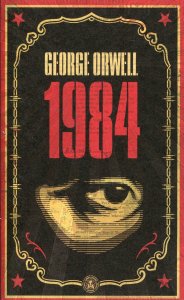
I was not a disciplined student in High School, particularly in English Literature. Every time a new book was assigned, I would journey to the Meadowbrook Mall and snag the Cliff Notes from Walden Books (this was long before the days of Spark Notes). I’d follow the same pattern each time: memorize the characters, setting and general plot from the Cliff Notes and then talk to the girls in my class who actually read the book to get the spirit of the text for the essay. I could spend 1/20th of the time it would take to read the thing and still get a solid B+. It worked – and there are some books for which I still don’t regret this approach. I’ll likely never find the grit to make it through Anna Karenina – that assignment virtually destroyed what could have been a great love of reading. Perhaps I would like it now, but just hearing the title still brings back a form of adolescent literary PTSD. But now I do love reading, and those classics were assigned for a reason. For the last couple of decades, I’ve been picking up many of those old high school books I now wish I would have read in my youth. The timeliest of these for our present circumstances is 1984, written by George Orwell and published in 1949. I finally read it for real last summer and have thought about the book numerous times during this pandemic.
Just a few weeks ago George Conway (spouse of Kellyanne Conway, who is in Trump’s Administration) blasted Fox News for their about-face on the Coronavirus using an Orwellian Newspeak quote: “He accepted everything. The past was alterable. The past never had been altered. Oceania was at war with Eastasia. Oceania had always been at war with Eastasia.” Trump’s takeover of the coronavirus news conference yesterday had a similar spirit. We may already live in an age of Newspeak.
But perhaps the most interesting parallel between the world of the dystopian novel and our current reality involves surveillance. In the universe of the novel, there is no privacy. Telescreens in homes and hidden microphones in the wilderness ensure the thought police can see everything and enforce obedience to Big Brother. Yuval Harari recently penned an article titled “The World After Coronavirus” that unpacks the extraordinary ways surveillance has been advanced in the attempt to quell the virus (Youtube summary HERE). The surveillance already existing in our world today makes the technology in 1984 look pathetic. After the virus, will we live in a world of totalitarian surveillance and nationalist isolation, not that unlike the novel?
If you’re looking for something to read during the pandemic, it would be hard to find a more reasonable classic than 1984. You could try to slog your way through a Tolstoy novel – perhaps the 1,400+ pages of War and Peace? But why bother when 1984 is only 328 pages, and Orwell’s doublespeak will make you think differently about both war and peace: In Oceania, “War is peace. Freedom is slavery. Ignorance is strength.”
 Michael Ferber