Reasons to Stay Alive

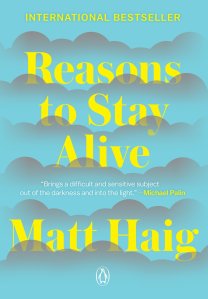
Pandemic Book Recommendation #17: Reasons to Stay Alive by Matt Haig

Depression and anxiety are not new. Two months ago, we were in the midst of a mental health crisis among youth and young adults. The onset of a pandemic, social distancing measures, and an economic downturn is likely to increase this trend. Matt Haig’s Reasons to Stay Alive was handed to me a few years ago by a student who struggled daily with suicidal ideation. Haig’s words were personal, relatable and life-giving to this person, who wanted me to have the book so I could share it with others. I’m glad I had it on my shelf because it genuinely has been a helpful resource for others – and at times for me.

Matt Haig is an English novelist and journalist – author of many popular works, including The Humans, The Last Family in England, The Possession of Mr. Cave, The Radleys, and many others. Reasons to Stay Alive is Haig’s telling of his journey through darkness and ultimate triumph over a depression that nearly took his life. It is the story of how he learned to live again, told through a series of short thoughts and reflections.

His reason for writing the book speaks for itself: “Ever since I realized that depression lied about the future, I have wanted to write a book about my experience, to tackle depression and anxiety head-on. So this book seeks to do two things. To lessen that stigma, and – the possibly more quixotic ambition – to try and actually convince people that the bottom of the valley never provides the clearest view. I wrote this because the oldest cliches remain the truest. Time heals. The tunnel does have light at the end of it, even if we aren’t able to see it. And there’s a two-for-one offer on clouds and silver linings. Words, just sometimes, can set you free.”

He has a chapter for men called, “Boys Don’t Cry,” in which he explores why more men die by suicide than women. Haig shares, “You are no less or more of a man or a woman or a human for having depression than you would be for having cancer or cardiovascular disease or a car accident… It is not you. It is simply something that happens to you. And something that can often be eased by talking. Words. Comfort. Support.”

Parts of the book are raw, and as someone who has only journeyed to the outer reaches of depression, I would think this would not be a book I would want to pick up in my darkest moments. But for many, including the student who gave it to me, those are the very times to read it. Haig has been to those darkest of dark places, and he lived to tell about it. He hopes we will continue the journey with him, and thus he provides compelling, poetic, and hopeful reasons to stay alive.

“I am you and you are me.
We are alone, but not alone.
We are trapped by time, but also infinite.
Made of flesh, but also stars.”

He borrows from his novel, The Humans, to make a point that minds move: “Your mind is a galaxy. More dark than light. But the light makes it worthwhile. Which is to say, don’t kill yourself. Even when the darkness is total. Always know that life is not still. Time is space. You are moving through that galaxy. Wait for the stars.”

There are many things in his book we need to hear and receive during this time of global crisis. “Nothing lasts forever. The pain won’t last. The pain tells you it will last. Pain lies. Ignore it. Pain is a debt paid off with time.”

At the end of the book, he includes sections providing steps and resources for getting help. In case you are reading this at a dark time and the book is not at hand, here are a few of them:

Canadian Association for Suicide Prevention
Centre for Suicide Prevention

eMentalHealth.ca

Kids Help Phone

Teen Mental Health

The Lifeline Mobile App

Embracing Vulnerability in Pandemic

Pandemic Book Recommendation #16: Strong and Weak by Andy Crouch

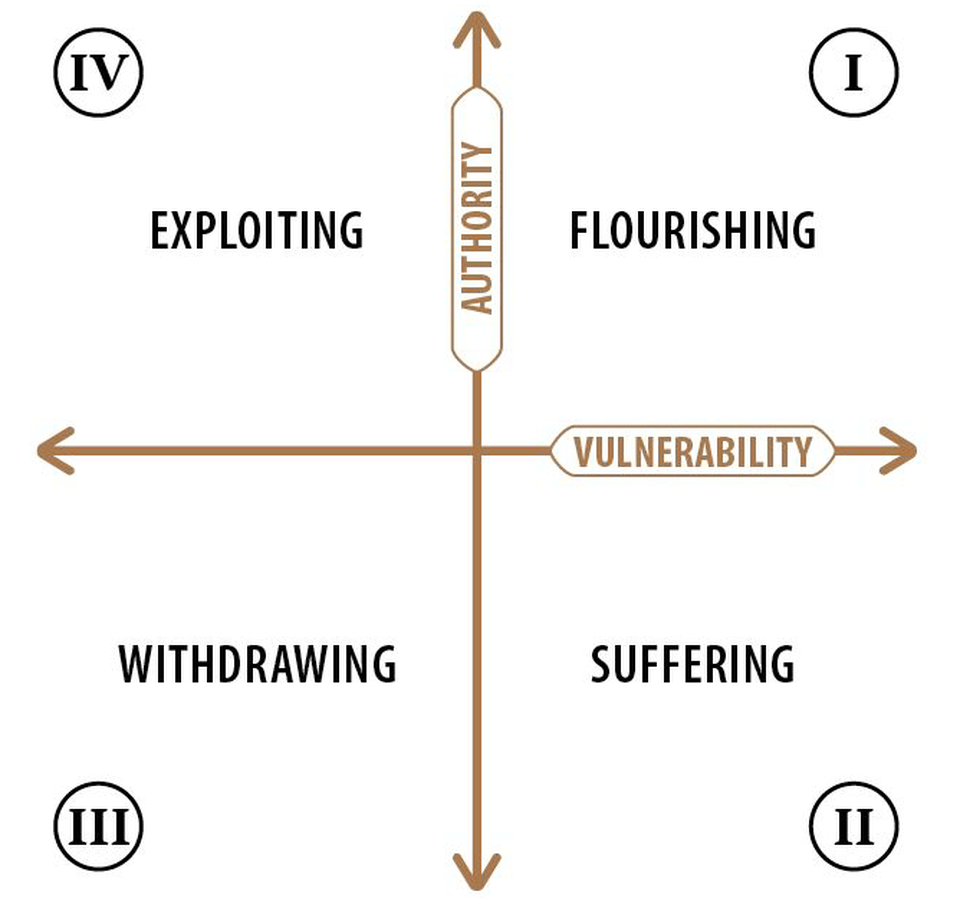
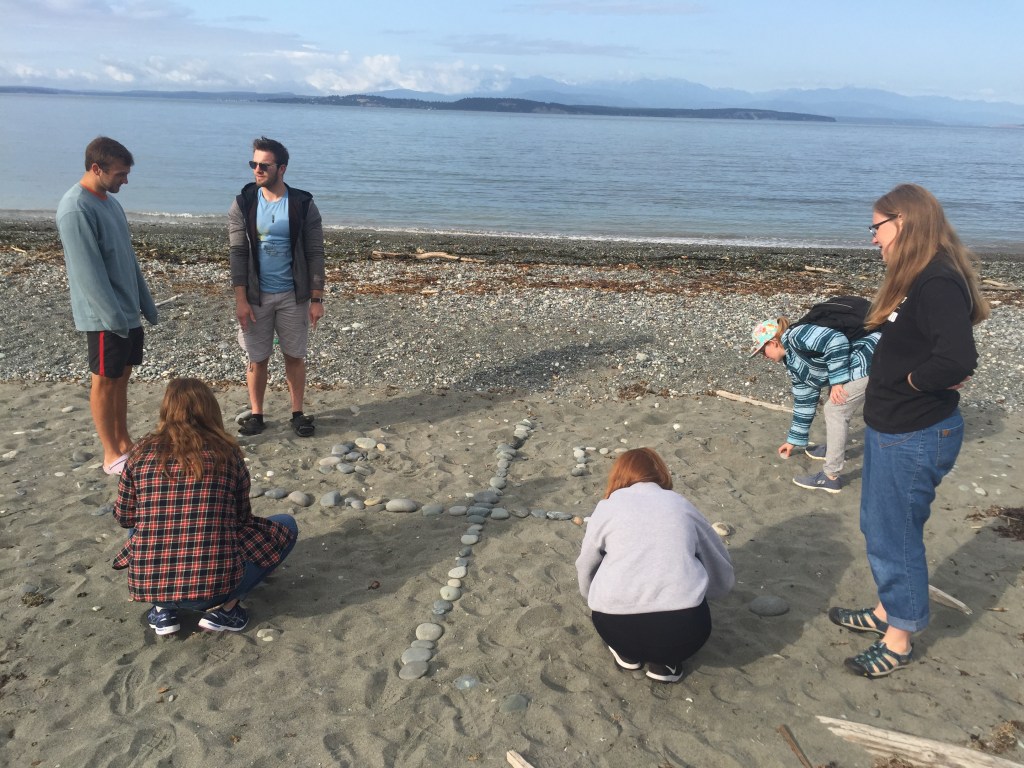
Strong and Weak is another book I use with my Au Sable International Development class each summer. Instead of assigning it as required reading, we dissect it during one of our beach discussions. In the book, Andy Crouch provides a fantastically profound yet straightforward 2X2 paradoxical grid juxtaposing authority with vulnerability. The paradox is that authority and vulnerability are not opposites but exist best together. In the class, we recreate the grid using rocks on the beach, then leave it for others to wonder about what kind of pagan ceremony occurred there.

In the grid, authority can be interpreted as power – similar to the kind of power discussed in my last review of Playing God. Strong and Weak is the sequel, and Jayakumar Christian continues to play an inspiring role. In Crouch’s model, the higher on the grid you are, the more self-efficacy you possess and the more capacity you have to exert authority over others. The further on the right you exist on the grid, the more vulnerable you are. So if you are in the lower left quadrant of “withdrawing,” then you may live like a character in the Wall-E movie, on an eternal cruise in which you are completely safe but also not using your God-gifted authority to make the world a better place. In the bottom right, you would have no power and be highly vulnerable; thus, you would be “suffering.” In the upper left, you might have extraordinary authority, but if you are not also vulnerable, then you become “exploiting.” Finally, Crouch describes the upper right quadrant as “flourishing” – being in a place of BOTH authority and vulnerability.

You need to read his short book to get the whole picture. In summary, Crouch uses Jesus Christ as a model to demonstrate the flourishing life as one of both authority and vulnerability, and he does this again through the lens of Philippians 2. When either authority or vulnerability is absent — or when both are missing — we find distortions in humans, organizations and institutions. Instead of flourishing, we create cultures immersed in suffering, withdrawing and exploiting. Leaders today need to be both strong and week – wielding authority with vulnerability.

The pandemic has created a situation in which nearly all of us find ourselves suddenly moving around on this grid. We may be unemployed, laid off, and financially vulnerable. Some of us are also vulnerable to the virus itself – our lives are literally in danger. We are collectively moving toward the bottom of the quadrant as the efficacy we had to determine our future erodes. A few of us may be fortunate enough to settle into the bottom left – to have the means to withdraw into video games or Netflix. Many of us, though, are suffering in the lower right quadrant – powerless to the changing world.

In this context, we are faced with a unique opportunity to follow in the footsteps of Jesus. We can do this in two ways.

First, we can ask ourselves whether our loss of power/authority is ultimately the loss of an idol and not a loss of efficacy in its own right. Have we been putting our hope and trust in our wealth? If so, the threat of losing it is tantamount to losing confidence in having a good future. The danger here is that we might spring into action to do whatever is necessary to protect that in which we trust. Crouch writes, “In the grip of idols, we believe that our problem is not enough authority. Life becomes a quest to acquire enough authority to manage and minimize our vulnerability… To people who see the world this way, gaining authority without vulnerability is the pearl of great price, something you would sell everything to obtain.” Crouch’s advice for us – if we find ourselves here – is as simple yet profound as his grid: relinquish power and confess sin.

“Therefore I tell you, do not worry about your life, what you will eat or drink; or about your body, what you will wear. Is not life more than food, and the body more than clothes? Look at the birds of the air; they do not sow or reap or store away in barns, and yet your heavenly Father feeds them. Are you not much more valuable than they? Can any one of you by worrying add a single hour to your life?  Matthew 6:25-27

Second, we can embrace our vulnerability as Christ embraced his. Crouch reminds us that the story which turned the world upside down is not a story of ultimate power made manifest, but of ultimate vulnerability to the point of dying on a cross. To become like Christ, what we are missing is not more authority, but more vulnerability. This is not trite, as many are experiencing the agony of the Garden of Gethsemane amid tragic loss. But we do not suffer alone. Christ has gone before us. He can be our model and even our companion on the journey. 

The pandemic is likely not going to be a short trial. On a podcast last week, Andy described how many Christian leaders seem to be looking at this pandemic as though it is a blizzard, suggesting we need to hunker down for a few days, then it will be over. He argues, based upon well-informed sources, that this will more likely be a full winter, if not even a mini ice age. Some, wishing this to be a blizzard and bent on the need for invulnerable authority, are already up in arms. Many of these individuals are Christians, and many pastors are encouraging their flocks to disregard the government and stand up for their God-given rights of freedom. The motto of West Virginia, my home state, is montani semper liberi – mountaineers are always free. The lockdown appears to many friends on my social media feed as an attack on liberty. But in the spirit of Strong and Weak, forcing our will while putting others at risk is not a Christian response. It is rooted in fear. If we want to be agents of transformation in the world today, perhaps we should take a lap through Strong and Weak before grabbing an assault rifle and heading to the capitol. There is a way to bear the burden of authority with vulnerability, and this book can help us find it.  

Playing God

Pandemic Book Recommendation #15: Playing God: Redeeming the Gift of Power by Andy Crouch

I took a day off yesterday and did not post, but if I were to have provided a book recommendation on Easter, it would have been Playing God by Andy Crouch.

One of the reasons I love this book is that Andy has channelled Jayakumar Christian as a model. Jayakumar is a World Vision practitioner in India who works with the lowest castes in some of the most impoverished contexts in Asia. I was exposed to Jayakumar through his published Master’s thesis, God of the Empty-Handed, when I worked for World Vision US Programs. I’ve used his ideas in many courses, especially the International Development and Sustainability class I teach each summer for the Au Sable Institute of Environmental Studies. God of the Empty-Handed is worthy of its own book recommendation down the road. But Playing God is an excellent introduction to Jayakumar’s ideas of power and powerlessness in the Kingdom of God. Jayakumar digs into how the powerful utilize god-complexes to play god in the lives of the poor by perpetuating their powerlessness through relational structures and systems of captivity. The examples may seem more evident for India’s caste system, but there are potent applications for North America as well. Andy Crouch spent time with Jayakumar, and Playing God was birthed from that inspiration, but written for use in the US and Canada.

Playing God investigates how power, when viewed through a Christian lens, is a gift – this is the volume’s central idea. Crouch is somewhat opposed to the bulk of writing in the social sciences that would define power as always about corruption and coercion (though we can find plenty examples of this, many unfortunately provided by the Christian Church). Power is intended to be about creation and restoration, and forms of power that coerce are diminishments and corruptions of true power. The intended purpose of power is flourishing. Crouch delineates how power corruptions are linked to idolatry and ideology, and he even includes a chapter on privilege. He draws upon Jayakumar’s work to consider solutions to today’s crises caused by god-playing. This is what makes the volume such a good read for the Easter season.

According to the ancient hymn captured in Philippians 2, though himself God, Christ emptied himself of himself to become human, take the nature of a servant, and die on the cross in the act of restoration. This is the great kenosis or self-emptying. Crouch calls us to either find ways of being icons and image-bearers of this kind of self-emptying power purposed toward flourishing, or suffering as idol makers corrupting power toward our own or our tribe’s advantage. And yes, for you lovers of the lectionary, I am aware that Philippians 2 is a Lenten passage. Nonetheless, it has powerful application in the Easter season as we seek to make our attitudes the same as that of Christ Jesus.

Playing God is a timely read in this moment of global pandemic as we think about the kind of world we want to create / recreate when we emerge from social distancing. There is a cacophony to recreate the world as it was before COVID-19; to jump-start the economy along with all of its structures and systems that keep some people in power and others in captivity. We can do better. Power is a gift because it is for flourishing – the flourishing of all people and the creation. “When power is used well, people and the whole cosmos come more alive to what they were meant to be.” (13) Perhaps it is time to abandon our image of GOP Jesus for the version we find in Scriptures such as Philippians 2?

1984

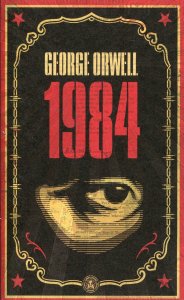
Pandemic Book Recommendation #12: 1984 by George Orwell

I was not a disciplined student in High School, particularly in English Literature. Every time a new book was assigned, I would journey to the Meadowbrook Mall and snag the Cliff Notes from Walden Books (this was long before the days of Spark Notes). I’d follow the same pattern each time: memorize the characters, setting and general plot from the Cliff Notes and then talk to the girls in my class who actually read the book to get the spirit of the text for the essay. I could spend 1/20th of the time it would take to read the thing and still get a solid B+. It worked – and there are some books for which I still don’t regret this approach. I’ll likely never find the grit to make it through Anna Karenina – that assignment virtually destroyed what could have been a great love of reading. Perhaps I would like it now, but just hearing the title still brings back a form of adolescent literary PTSD. But now I do love reading, and those classics were assigned for a reason. For the last couple of decades, I’ve been picking up many of those old high school books I now wish I would have read in my youth. The timeliest of these for our present circumstances is 1984, written by George Orwell and published in 1949. I finally read it for real last summer and have thought about the book numerous times during this pandemic.

Just a few weeks ago George Conway (spouse of Kellyanne Conway, who is in Trump’s Administration) blasted Fox News for their about-face on the Coronavirus using an Orwellian Newspeak quote: “He accepted everything. The past was alterable. The past never had been altered. Oceania was at war with Eastasia. Oceania had always been at war with Eastasia.” Trump’s takeover of the coronavirus news conference yesterday had a similar spirit. We may already live in an age of Newspeak.

But perhaps the most interesting parallel between the world of the dystopian novel and our current reality involves surveillance. In the universe of the novel, there is no privacy. Telescreens in homes and hidden microphones in the wilderness ensure the thought police can see everything and enforce obedience to Big Brother. Yuval Harari recently penned an article titled “The World After Coronavirus” that unpacks the extraordinary ways surveillance has been advanced in the attempt to quell the virus (Youtube summary HERE). The surveillance already existing in our world today makes the technology in 1984 look pathetic. After the virus, will we live in a world of totalitarian surveillance and nationalist isolation, not that unlike the novel?

If you’re looking for something to read during the pandemic, it would be hard to find a more reasonable classic than 1984. You could try to slog your way through a Tolstoy novel – perhaps the 1,400+ pages of War and Peace? But why bother when 1984 is only 328 pages, and Orwell’s doublespeak will make you think differently about both war and peace: In Oceania, “War is peace. Freedom is slavery. Ignorance is strength.”

Mindset

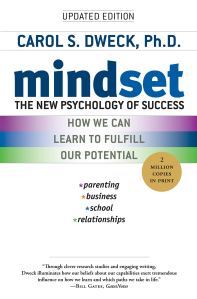
Pandemic Book Recommendation #11: Mindset by Carol S. Dweck

Yesterday I recommended the book Grit and shared my definition of fortitude: grit plus a growth mindset. Today’s book recommendation is essentially part 2. Like Grit, Mindset is a popular recast of a lifetime of scholarship from Carol S. Dweck, Professor of Psychology at Stanford.  

Her premise is quite simple and not very earth-shattering when taken at surface level. For those who are “fixed,” it is transformative. People with a fixed mindset believe that abilities are just that. They are less likely to flourish than those with a growth mindset, who believe that skills can be developed. “I’m not smart enough,” or “I’m not good enough,” becomes the mantra of the fixed. This attitude can be found in just about any aspect of life from athletics to academics to parenting. Dweck argues that it is possible for people to decide they can accomplish that which seemed impossible – if they change their attitude.  Through determination and hard work, students can develop a love of learning and succeed, parents can figure out how to homeschool, and people who are in quarantine can, indeed, stay put.

The combined power of grit and a growth mindset can provide the fortitude necessary to persevere through this pandemic. We can remind ourselves that we can and will get through this, and we can find new ways every day to grow in the process.

What opportunities does this time of pandemic offer you to develop a growth mindset, and how can grit help you pursue them?

Pandemic Book Recommendation #10: Grit

Grit: The Power of Passion and Perseverance by Angela Duckworth

When I was VP Student Life / Dean of Students at The King’s University, I was constantly looking for resources to help students persevere. This book was one of my go-to volumes. It’s in the self-help genre, so it may be a little painful for some academics. However, Angela Duckworth is an academic herself – she currently serves as the Christopher H. Browne Distinguished Professor of Psychology at the University of Pennsylvania. Grit is a popularized and somewhat watered-down version of her research, so some of you will prefer her more robust academic publications

When my old team and I were trying to come up with the theme for 2019-20 we settled on “Fortitude,” partially because it was our university’s 40th anniversary.  (Get it – “Forty-Tude”?). I defined fortitude as grit plus a growth mindset, and I used Duckworth’s concept of grit as half of this formula (I’ll hit the other one tomorrow using the book Mindset.) Who was to know how important fortitude would become for all of us in this bizarre year?    

According to the Merriam-Webster dictionary, grit in the context of behavior is defined as “firmness of character; indomitable spirit.” Duckworth, based on her studies, tweaked this definition to mean “perseverance and passion for long-term goals.” She and her team observed that individuals high in grit were able to maintain their determination and motivation over long periods despite experiences with failure and adversity. They concluded that grit is a better predictor of success than intellectual talent (IQ), based on a number of substantial studies. She explores this question: talent and intelligence/ IQ being equal, why do some individuals accomplish more than others?

Some of the takeaways of her research could be helpful during this time of pandemic. First, hope is beneficial in becoming gritty. Hope may be hard to come by these days, but it is worth imagining a positive outcome, no matter how distant it feels. If we can see a shimmer of light at the end of the tunnel, we can keep moving forward. Part of this involves finding or rediscovering purpose. How are we making meaning and believing what we do makes a difference to ourselves and those for whom we care?  Is our time in quarantine an opportunity to discover or rediscover our passion? Setting meaningful goals and following through on them can help us make the most of the opportunities that present themselves during these unprecedented times.

Duckworth describes her volume through a deliciously caffeinated lens. She is “taking you out for a coffee and telling you what I know.”  If you love coffee and aren’t getting out much these days (and who is?), why not give this one a try?

The bright morning star and the fruit tree: metaphors for hope in these troubled times

Pandemic Book Recommendation #9, Part 3: Hope

Part 2: Ideology

Part 1 Idolatry

Every day during this pandemic, I find it more difficult to see hope, especially when it comes to COVID-19’s spread across America. My oldest daughter is in Phoenix, and my family, including my parents, are spread across West Virginia and Kentucky. The slow daily crawl watching the case numbers climb is like a dawdling spiritual poison from a drug that takes weeks to finish its work.  Nonetheless, hope is always available if we are willing to seek it out. I’m trying. Bob Gouzwaard, Mark Vander Vennen and David Van Heemst remind us that hope is real because, “at its core, it is not a human creation. It attaches itself directly to the faith that God is deeply engaged in all of human history.” (172)

The conclusion of their book contains themes and metaphors of hope that apply to the tragic realities of pandemic. Some of their tropes are extraordinary and have consumed a few classes worth of past discussions in my courses. There is no space here for unpacking the circle and the cross (175), the periscope (181), the minesweeper (184), or the rope-ladder (187). Here I will only stick to two that seem most pertinent.

The Morning Star

There are beautiful signs of hope in the form of front-line health care workers sacrificing their own lives and safety to serve others – but even these stories exist in the context of tragedy. My Facebook feed is awash in the language of fear, blame and shock. When will this end? Where is God?

The authors of Hope in Troubled Times remind us that “Christian hope is a hope of contrast: it revives in the middle of the night, just when darkness seems to overpower us.” (176) They use the Biblical image of the morning star, which appears at the bleakest hours of the night, as a demonstration of the defeat of darkness. When the star appears, the morning is behind it. In the last words Jesus spoke to his disciples, he proclaimed, “I am… the bright morning star.” (Rev. 22:16)

The book of Esther in the Bible does not contain a mention of God. Yet, Esther’s name means “morning star.” She lived when the elimination of Israel appeared as fate. God seemed absent – but was there all along. “Miracles did not save Israel, at least not miracles as we understand them. But as a God who works hiddenly, God linked his saving acts to the act of Esther, who in obedience put her own life in jeopardy… When Esther is seen in the darkness of exile, that is the sign of daybreak. Where God in his hiddenness can be delineated, there is sign that the defeat of the night has come.” (177) Our front line health care workers are the Esthers of our day – the bright morning stars revealing the light that, though dim now, is soon to awaken the morning.

The Fruit Tree

I have suggested through the lens of this book that we are living in an age in which progress and material prosperity is the reigning ideology, perhaps to the point where economic growth has become an idol. This tragic pandemic can act as a catalyst for us to search our hearts about how we want to live in the coming post-COVID-19 world. The authors provide the fruit tree as a helpful metaphor in this regard.

“No fruit tree is inclined to grow infinitely in height. If it did so, it would have to jettison all of its inefficient cells. It would have to put greater pressure on the soil and forgo the production of fruit entirely. Instead, at a certain point a fruit tree exercises built-in wisdom to redirect its growth energies away from expansion in height and toward the production of fruit. It reaches a saturation point and recognizes it as such. This allows the tree to create room to build up reserves and then to redirect its growth energies toward the production of fruit.” (191)

Like fruit trees, our economies – at the scales of the household and the nation – were not intended to grow infinitely forever. Like trees, we arrive at saturation points in which we have a choice to re-orient our energies toward the production of fruit rather than infinite growth. The authors suggest we “take one decisive, perhaps painful, but also realistic step back from the economic goal that hypnotizes us.” On the other side of this pandemic, we can choose to develop a pre-care economy as opposed to a post-care economy. This would place care needs first rather than last on a list of priorities. We could turn away from simplistic material expansion and toward sustainable economies that build community, meet the needs of the poor, and invest in the preservation of culture and the environment. Perhaps one of our problems is that “we have failed to imagine that the world can operate in any other way.” (192)

Pandemic Book Recommendation #9: Hope in Troubled Times, Part 1: Idolatry

I started this blog as an attempt to stay mentally healthy and positive during a time of social distancing. Many others have used social media as a platform for humour in this time of trial, and I’ve enjoyed seeing and relating to the many Facebook memes involving homeschooling, cats and social distancing. It worked for a few days. But two days ago I “popped” watching events unfolding in my home country. The context involved the government abandoning the advice of health experts and reopening the US economy to jump-start economic growth.

In the late evening of March 23, I posted the following on Facebook, “What we saw today in President Trump’s speech reveals the true god America worships. What do you say about a society that is willing to offer human sacrifices to appease the invisible hand of the market so we can all go back to consumption at the malls and prosperity in the stock market? Sacrifice the creation to this god – of course! Sacrifice the poor – no problem! Now we also appear to be willing to sacrifice our parents and grandparents. When will we confess and repent?”

Needless to say, this post started a bit of a discussion – and not much of it was touchy-feely or positive. The statement encapsulates a breadth of literature that is worth considering in these difficult days of pandemic. So, I’m going to step away from the positive self-help books for a few days and try to be a bit more prophetic in this blog. No matter your religious persuasion (or the lack thereof), consider looking at the monumental decisions being made in the United States through the lens of idolatry.

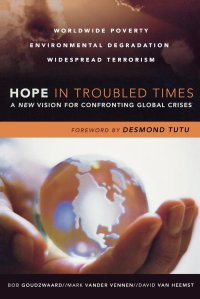
In 2007 Bob Gouzwaard, Mark Vander Vennen and David Van Heemst wrote Hope for Troubled Times: A New Vision for Confronting Global Crises. The volume is as important today as it was a decade ago when I started using it in some of my courses. I’m not going to provide a full review of it here, but rather use the book as a lens to consider how our current reliance on progress and economic growth could be an idol, in the fashion of the gods our ancestors would have crafted from wood or stone. I’ll make subsequent posts linking this idolatry to ideology, and then discuss hope for moving forward.

To start, the authors do assert that nothing is inherently evil about the economy, money or the market (170). Nonetheless, like wood or clay, these things can be formed into an apparatus to be worshiped. They describe three steps through which idol worship unfolds. First, people objectify the god using material available in order to bring the god closer. The image acts as an access point or gateway to the divine. Then people venerate the idol by bringing it sacrifices. Finally, people gradually become “reshaped and transformed into the likeness of their gods” (40).

Idols have mouths, but cannot speak,
Eyes, but they cannot see;
They have ears, but cannot hear,
Noses, but they cannot smell;
They have hands, but cannot feel,
Feet, but they cannot walk;
Nor can they utter a sound with their throats.
Those who make them will be like them,
And so will all who put their trust in them. (Ps. 115:5-8)

The authors assert that fear is what drives the final step. The image of their god may remain opaque, but its representation becomes very real. “The power that people delegate to the idol is a power that both saves and destroys. As such, it instills deeper and deeper anxiety. The slightest misstep can trigger the wrath of the idol, a wrath that may bring people to ruin. Serving idols therefore always brings with it a form of hypnosis, a hypnotic narrowing of consciousness. People’s perception of reality shrinks into a matter of merely finding the right type of interaction with the idol. But by then the god has, to some extent, assumed control: it now largely charts its own autonomous course. When that occurs, fear becomes the chief characteristic of life, and the sense of betrayal is pervasive.” (41)

Today it is quite common to hear the market described using terminology usually reserved for the religious realm. This involves not only the market’s saving power but also the sacrifices needed to maintain it.

– “We must follow the dictates of the market.”
– “Only economic growth can save us.”
– “All groups in society need to make sacrifices for a better future.” (97)

We are hearing this very language right now in the debate to jump-start the economy at the expense of the lives of front line health care workers and seniors. These sound profoundly religious, and this is not accidental. “It hints at decisions made about ultimate meaning, done either openly or unconsciously, without which people do not see life as feasible. Imitation saviors still move among us, and we see them as entitled to demand sacrifices.” (98)

Goudzwaard et al. make a strong argument that in the west, we are now trapped inside the cocoon of a perspective that will only consider solutions in line with the way we define progress (25). We have become consumed and obsessed with reaching our goals regardless of the cost. They argue that this is idolatrous in the sense that we exalt our goals of endless progress and material prosperity as the very powers that will deliver us to this end. In this manner, we have become dependent on our creations. But at a cost!

“The gods never leave their makers alone. As soon as people put themselves in a position of dependence on their gods, invariably the moment comes when those things or forces gain the upper hand, when they begin to mold the lives and thoughts of their adherents. Humanly made things or forces begin to control their makers even to the point where they become powers of domination. Against them the human will weakens or even vanishes, while the initial goals tend to become bleak, obscured, or forgotten, building in the moment when the gods’ betrayal becomes transparent. But by then it could be too late.” (27)

These times call for serious introspection and reflection. The economy is a social construct. Have we crafted a god in the form of material prosperity? If so, are we truly willing to pay the price of tribute? Are we so obsessed with our individual net worth and our collective GDP that we are willing to make this level of sacrifice to jump-start the economy? The rest of the world is prioritizing the lives and wellbeing of citizens – the very things the market was originally intended to enhance. Will America offload its responsibilities to fellow citizens and allow a false god to dictate the horrible sacrifices required? If so, can we continue to claim that America is a Christian nation?

Coming Up:
Part 2: Ideology
Part 3: Hope in Troubled Times

Pandemic Book Recommendation #8: Radical Acceptance

I had a difficult December and January this year, with an unexpected change in my job position right before Christmas due to budget restructuring. This was before Christina’s job was eliminated due to the AB budget changes in health care and a global pandemic roared its ugly head. Tara Brach’s “Radical Acceptance: Embracing Your Life with the Heart of a Buddha” has been one of the most helpful books inspiring me to live into saying “Yes” to an ever-evolving future. And no, I am not a Buddhist – this book has a lot to offer to everyone.

I listened to this on Audible after it was recommended to me by (surprise!) my wife, Christina. Tara Brach is a Clinical Psychologist and the founder of the Insight Meditation Community. She became a helpful mentor as I listened to her book at the gym while on the treadmill or elliptical. (Remember when we could go to the gym? Sigh…).

What is Radical Acceptance? Tara defines it as, “Clearly recognizing what is happening inside us, and regarding what we see with an open, kind and loving heart.” Radical Acceptance is about leaning into the present moment to observe our experience clearly, and be compassionate to ourselves about that experience. Radical Acceptance involves the practice of mindfulness. Jon Kabat-Zinn, whom I discussed last week, teaches a form of mindfulness stripped of religion. Though I am neither a Buddhist nor a philosophical idealist, I have tremendous respect for the practice of mindfulness, which is reflected in some ancient Christian traditions such as contemplative prayer.

I believe three of Tara’s practices, in particular, are helpful during this time of pandemic:

First, the power of a pause: taking time to stop and remember where we are, what we are doing, and why we think it matters. All of our patterns are changing as we step into the “new normal” of social distancing and, perhaps at times, full social isolation.  The pause helps us to be present in these changes and find opportunities for peace and gratitude.

Second, an essential question: What would it be like if we could accept life at this moment exactly as it is? What if I (you?) stopped thinking about how this moment could be better? If only there were sports. Or more seriously, if only I could work another shift to pay rent.  What if we stopped resisting our reality and instead open ourselves to the joy, freedom, and possibility that is right here in this moment? No matter how dire our situation, we can find acceptance and, therefore, peace – radical acceptance.

Finally, Smiling. Seriously. Our world needs more smiles right now. Tara defines a smile as the, “unconditional friendliness that welcomes experience without fear.” You could change the world of those around you this day with a smile.

Pandemic Book Recommendation #7: When the Body Says No

In my book recommendation yesterday, I shared about a three-day hiking extravaganza in which my brother and I slogged through miles of the unbelievably beautiful Canadian wilderness. What I didn’t share was that the week after this trip, my body shut down. Only it didn’t start with my body – it started with my mind.  On Friday, on the way up to the top of Ha Ling, I received a text requesting that I present something at a meeting at work Monday afternoon. I had already called off work that day, but because I have some people-pleasing issues, I said “OK”. I was unprepared for a presentation, but it would not be the first time I have winged something. After hiking all those kilometers, Andy and I stayed up until 1 am Sunday night talking, then woke up at 5 am. I dropped him off at the Calgary airport and drove to Edmonton, needing to pull off the road twice for twenty-minute cat naps. I made it to the meeting, but as I started my presentation my mind literally shut down. I was unable to talk and even began to have trouble breathing. I thought it was a panic attack, which threw me for a loop because I have been a public speaker for years. The experience stressed me out and I had trouble sleeping the week after. The following Saturday, at our university’s annual banquet, it happened again – only this time in front of 400+ people, including our university’s board of governors and donor base. It was a humiliating experience.

Sentinel Pass

I spent the next month trying to sort out what happened. Was I having a mental breakdown? Is there something wrong with me – a brain tumour or something scary? Following a session with a Psychiatrist, some Cognitive Behavioural Therapy with a Psychologist, and a thorough medical exam, a cause was determined – and you already know what it is. It turns out middle-aged chubby guys should not try to keep up with younger marathon runners in the mountains, then make presentations at work on almost no sleep.  Who knew!?

Eiffel Lake

During my time of healing and discernment, someone recommended Gabor Maté’s book. It is similar in some ways to Bessel van der Kolk’s The Body Keeps the Score; only Gabor Maté was not fired for bullying and mistreating his employees (yikes!). Maté is a Vancouver physician who has, throughout his career, advocated that we are holistic organisms with intricate connections between mind, body, and spirit. He uses examples of famous people such as Gildna Radner, Ronald Reagan and Stephen Hawking to illustrate chapters on stress, negative thinking, emotional repression, relationships, etc. Maté manages to walk the fine line between blaming someone for their illness and analyzing the broader factors leading to increased health risk.

There is a lot to consider from this book during a time of pandemic. Perhaps top of the list is Gilda Radner’s advice: “It is important to realize that you have to take care of yourself because you can’t take care of anybody else until you do.” This is a time of incredible levels of stress and anxiety as we collectively – and almost instantaneously – try to adjust to new ways of working from home, parenting, and interacting with one another. And, we’re doing this in the context of a terrifying and deadly pandemic. Our patterns of processing this kind of stress may not have been healthy in the best of times, and now, with metaphorical fans covered in poo, our bodies may begin to say “No.” Perhaps they were saying “No” last week, and now they are saying, “Hell No!” We mustn’t ignore what our bodies are trying to communicate.

Maté begins most chapters with rather sad stories of pain, abuse, repression and loss. So, during this time in history, give yourself permission to skip the depressing stuff and raid the book for its best part. In the last chapter, he provides advice on confronting the stress patterns that haunt us.

You don’t have time to read the book while working from home and taking care of kids? No problem. You can find some of his resources HERE on his website.