
In my book recommendation yesterday, I shared about a three-day hiking extravaganza in which my brother and I slogged through miles of the unbelievably beautiful Canadian wilderness. What I didn’t share was that the week after this trip, my body shut down. Only it didn’t start with my body – it started with my mind. On Friday, on the way up to the top of Ha Ling, I received a text requesting that I present something at a meeting at work Monday afternoon. I had already called off work that day, but because I have some people-pleasing issues, I said “OK”. I was unprepared for a presentation, but it would not be the first time I have winged something. After hiking all those kilometers, Andy and I stayed up until 1 am Sunday night talking, then woke up at 5 am. I dropped him off at the Calgary airport and drove to Edmonton, needing to pull off the road twice for twenty-minute cat naps. I made it to the meeting, but as I started my presentation my mind literally shut down. I was unable to talk and even began to have trouble breathing. I thought it was a panic attack, which threw me for a loop because I have been a public speaker for years. The experience stressed me out and I had trouble sleeping the week after. The following Saturday, at our university’s annual banquet, it happened again – only this time in front of 400+ people, including our university’s board of governors and donor base. It was a humiliating experience.
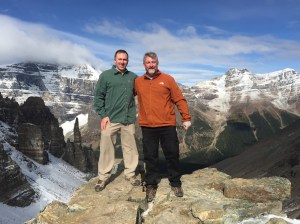
I spent the next month trying to sort out what happened. Was I having a mental breakdown? Is there something wrong with me – a brain tumour or something scary? Following a session with a Psychiatrist, some Cognitive Behavioural Therapy with a Psychologist, and a thorough medical exam, a cause was determined – and you already know what it is. It turns out middle-aged chubby guys should not try to keep up with younger marathon runners in the mountains, then make presentations at work on almost no sleep. Who knew!?

During my time of healing and discernment, someone recommended Gabor Maté’s book. It is similar in some ways to Bessel van der Kolk’s The Body Keeps the Score; only Gabor Maté was not fired for bullying and mistreating his employees (yikes!). Maté is a Vancouver physician who has, throughout his career, advocated that we are holistic organisms with intricate connections between mind, body, and spirit. He uses examples of famous people such as Gildna Radner, Ronald Reagan and Stephen Hawking to illustrate chapters on stress, negative thinking, emotional repression, relationships, etc. Maté manages to walk the fine line between blaming someone for their illness and analyzing the broader factors leading to increased health risk.
There is a lot to consider from this book during a time of pandemic. Perhaps top of the list is Gilda Radner’s advice: “It is important to realize that you have to take care of yourself because you can’t take care of anybody else until you do.” This is a time of incredible levels of stress and anxiety as we collectively – and almost instantaneously – try to adjust to new ways of working from home, parenting, and interacting with one another. And, we’re doing this in the context of a terrifying and deadly pandemic. Our patterns of processing this kind of stress may not have been healthy in the best of times, and now, with metaphorical fans covered in poo, our bodies may begin to say “No.” Perhaps they were saying “No” last week, and now they are saying, “Hell No!” We mustn’t ignore what our bodies are trying to communicate.
Maté begins most chapters with rather sad stories of pain, abuse, repression and loss. So, during this time in history, give yourself permission to skip the depressing stuff and raid the book for its best part. In the last chapter, he provides advice on confronting the stress patterns that haunt us.
You don’t have time to read the book while working from home and taking care of kids? No problem. You can find some of his resources HERE on his website.
 Michael Ferber